









- SEE & Do
- music & entertainment
- MOGUMOGU (New!)


- Price:
Live music generally ¥1,500–¥3,000
- Address:
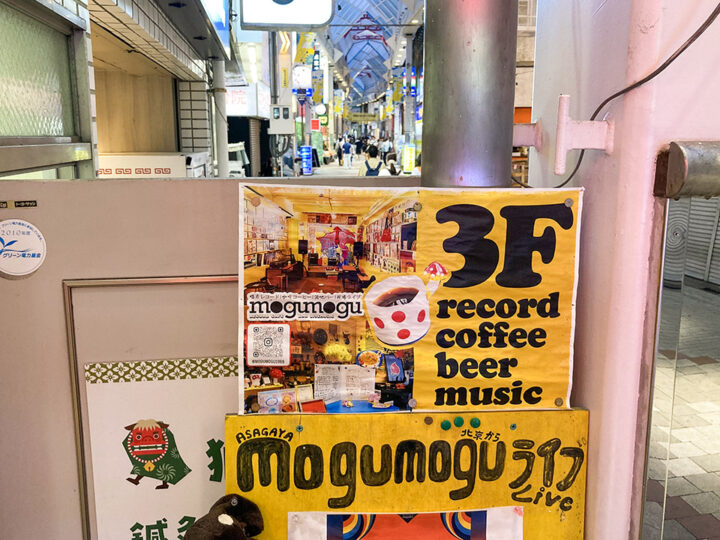
- 1 Chome-36-15 Asagayaminami, Suginami, Tokyo (3rd Floor)
- Distance from Station:
- 3 minutes on foot from JR Asagaya Station (South Exit)
- Open:
- 2:00pm – 12:00am
- Website:
- https://www.instagram.com/mogumogu1969 (external link)
- Communication:
- Japanese, Chinese, and some English
- no-smoking
- wifi
MOGUMOGU (New!)
Building a Musical Bridge Between Beijing and Tokyo
[published September 2026]
Hidden Above Asagaya
Hidden away in Asagaya’s Pearl Center shotengai (shopping street) on the third floor of an unassuming building, you’ll find Mogumogu, one of the coolest spots in Suginami, maybe even all of Tokyo.
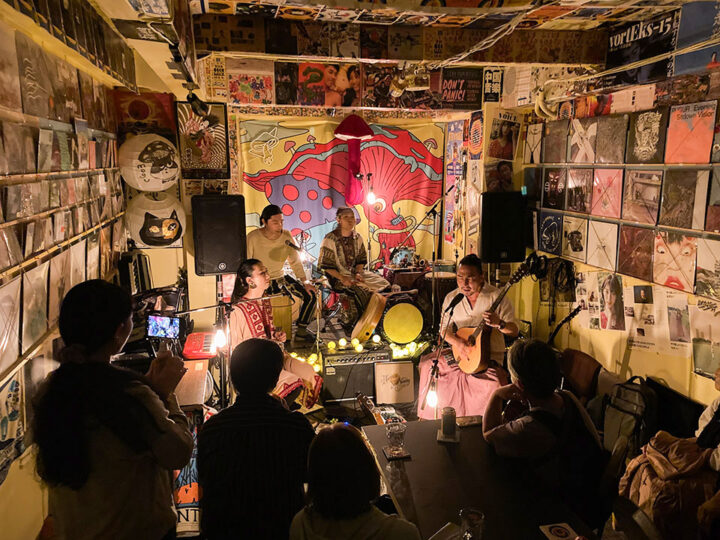
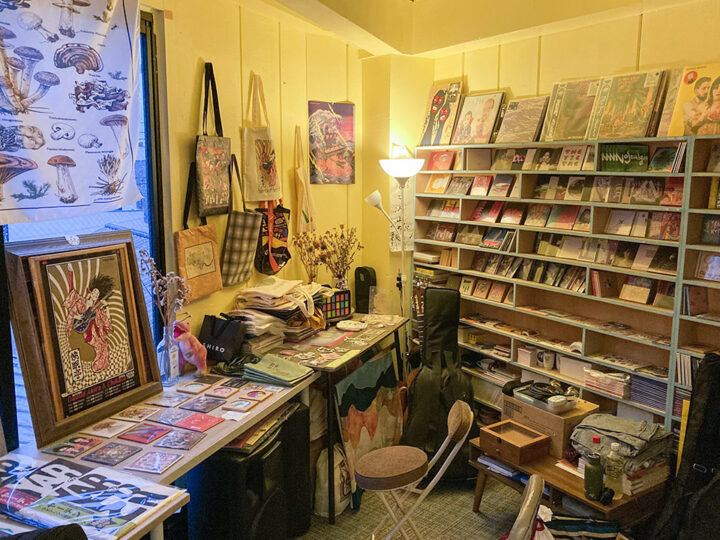
Trudging through the rain we couldn’t wait to catch performances by Dri:moon and Tsurugaya. Both bands were outstanding, but the venue itself made the night. We sat only a few feet from the musicians. Behind them, the walls were covered with records, posters, and flyers. Handmade ceramics and calligraphy hung among psychedelic mushroom-themed décor. It felt less like a typical Tokyo live house and more like someone’s wild living room—someone who’d spent the last twenty years building connections between the underground music scenes of China and Japan.
Part record shop, part café and bar, part “live house” music venue, and part community center, Mogumogu serves as a gateway to Chinese independent music while providing a welcoming home for artists and audiences from Japan and around the world.
From Beijing to Tokyo
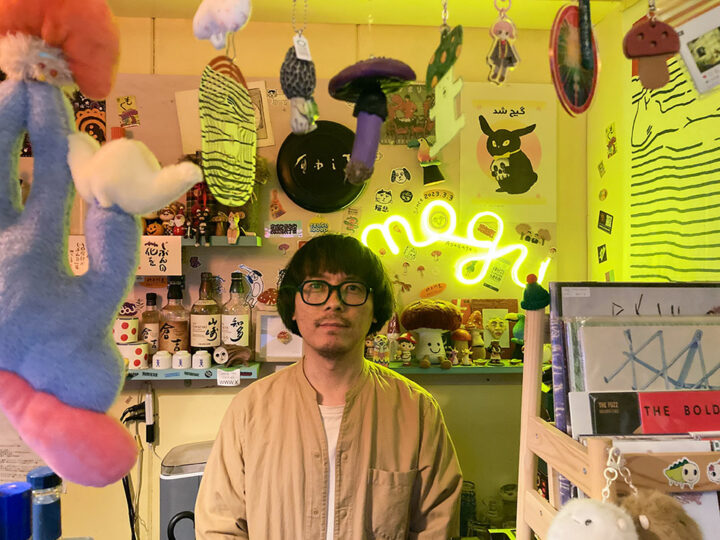
The venue is the creation of Mogu, hailing from Beijing. He is a music promoter, record label owner, and cultural organizer whose involvement with independent music stretches back more than two decades.
Long before opening Mogumogu in Tokyo, Mogu was building music communities in Beijing. He opened his first music-related space there in 2003 and later founded Mogu Records, an independent label dedicated to underground artists. Over the years, he became known for organizing tours and creating opportunities for musicians to reach new audiences. He first brought Chinese bands to Japan and now helps Japanese artists tour China, creating a two-way exchange between the countries’ independent music scenes.
Today, he continues to operate his Beijing venue while running Mogumogu in Tokyo alongside his wife, who warmly welcomes guests in English, Chinese, and Japanese. Together they have created a space that feels less like a business and more like a musical map of bands and friendships that spans beyond.
For Mogu, opening a venue in Japan was the culmination of a long-standing affection for the country. He says he fell in love with Japan and the musical freedom it offered. Nearly a decade before opening Mogumogu, he explored the quirky neighborhoods along the Chuo Line in Tokyo. While nearby Koenji attracted him with its famous music scene, Asagaya offered something quieter and, importantly, a building where live music could flourish.
The result was Mogumogu, which opened in March 2023.
More Than a “Live House”
The name itself reveals much about the venue’s personality. “Mogu” means “mushroom” in Chinese, and mushrooms appear everywhere throughout the space. A giant mushroom mural dominates the stage wall. Mushroom-shaped lamps glow from shelves, while ceramic mushroom dishes, ornaments, and artwork are scattered throughout the room. Far from being a gimmick, the theme reflects Mogu’s playful creativity and eclectic tastes.
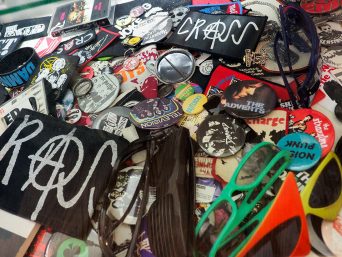
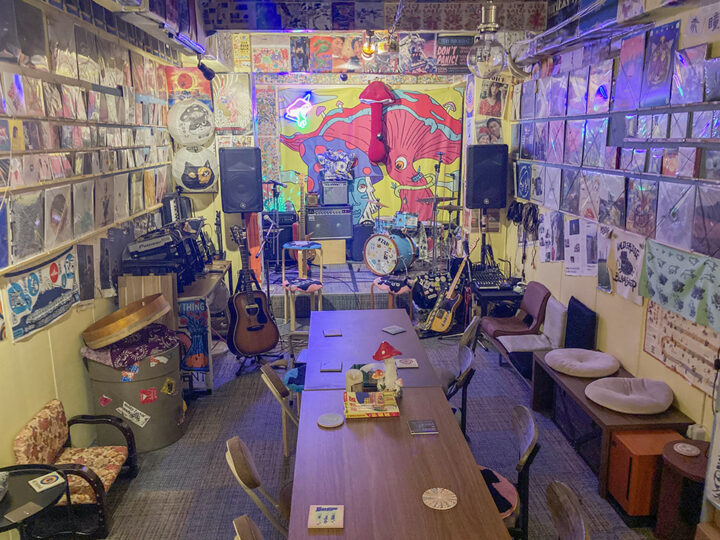
The first thing visitors notice is the décor. Nearly every available surface is covered with posters, flyers, record sleeves, stickers, artwork, and handmade decorations. Shelves display ceramic figures, mushroom-themed crafts, books, coasters, and other curios collected over the years. The effect is a compact psychedelic cultural lair, part record store, part art gallery, part clubhouse, and part museum of underground music culture.
The room itself is intimate and inviting. A long communal table runs perpendicular to the stage, surrounded by an assortment of chairs and stools, covered with hand-crocheted seat cushions. Depending on the setup, the venue can accommodate around seventy people standing or about forty seated comfortably.
That sense of accumulated history extends to the record collection. Mogumogu houses roughly 500 Chinese indie records and CDs spanning rock, folk, experimental, and electronic music. Many are difficult or impossible to find elsewhere in Japan. The shop also carries books, clothing, and small goods from China, offering visitors a glimpse into a contemporary creative culture that many Japanese listeners rarely encounter.
Mogu sees music as one of the most effective forms of cultural exchange. He points out that Chinese independent musicians often tackle social issues and contemporary life, offering perspectives that challenge simplistic views of modern China. Through records, live performances, and conversations over drinks, Mogumogu creates opportunities for those voices to be heard.
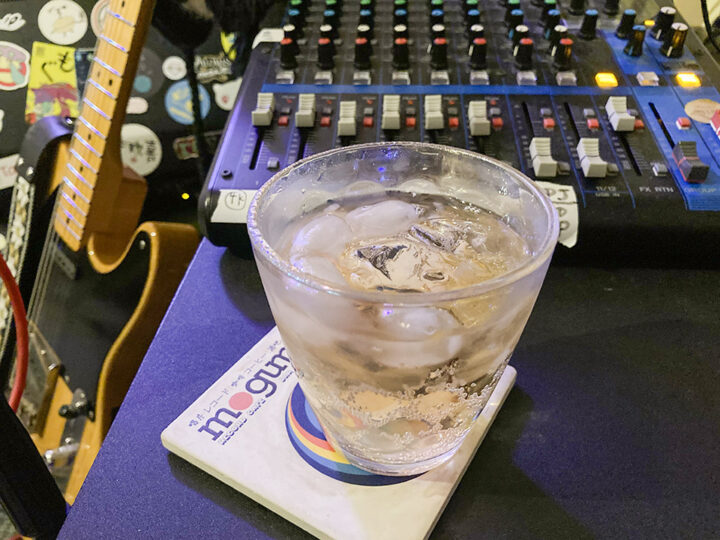
The bar is simple but thoughtfully curated. While there is no full food menu, guests can enjoy beer, cocktails, and baijiu: the traditional Chinese spirit distilled from sorghum. For many visitors, it will be their first encounter with baijiu, with its distinctive aroma and floral, slightly sweet notes, with hints of anise and licorice, unlike almost anything else served in Tokyo bars.
Music isn’t Mogu’s only artistic passion. He is also a skilled calligrapher and offers calligraphy classes, adding yet another layer of Chinese culture to the venue.
A Bridge Built on Music
Music remains at the center of everything.
Live performances take place almost every day of the week, with two events often scheduled on weekends and holidays. Admission typically ranges from 1,500 yen to 3,000 yen, and the programming is refreshingly eclectic. Indie rock, folk, experimental music, noise, singer-songwriters, improvised performances, and international touring artists all appear on the calendar. Chinese bands visiting Japan regularly perform here, but the venue welcomes musicians of virtually every genre and nationality. If you’re a performer yourself, check the calendar above the bar. There may even be an open date waiting for you.
On the night of our visit, Dri:moon and Tsurugaya delivered captivating performances to an attentive audience gathered only a few feet away. Dri:moon channeled the spirit of classic seventies acoustic-based rock, while Tsurugaya blended ethnic-inspired vocals and percussion with modern keyboard textures. Both performances perfectly suited the room’s intimate atmosphere, where every expression, every note, and every subtle musical interaction could be appreciated.
It would be easy to describe Mogumogu simply as a live music bar or record store. It is certainly both of those things. Yet, doing so would miss its greater significance.
At a time when China and Japan are often discussed through the lens of politics, economics, or international tensions, Mogumogu operates on a human scale. Here, cultural exchange happens naturally through records passed across the counter, conversations shared over drinks, and unforgettable live performances.
The venue reflects the work Mogu has been doing for more than twenty years: creating connections through music.
Near an area already famous for live music, Mogumogu stands apart not because of its size or location, but because of its purpose. It is a place where independent artists, listeners, and cultures meet. Whether you’re searching for a rare Chinese indie record, an unusual drink, or simply hoping to discover your new favorite band, Mogumogu offers an experience unlike anywhere else in Tokyo.
Oddly enough, a room full of records and mushrooms has become a bridge stretching from Beijing to Tokyo, one performance at a time.
ACCESS
Writer: Joel
Photographer: Greg