









- EAT & DRINK
- sushi & seafood
- NISHIBUCHI FUGU & JAPANESE RESTAURANT


- Price:
lunch from ¥1540, dinner courses from ¥18,000
- Address:
- 3 Chome-3-16 Asagayaminami, Suginami, Tokyo
- Distance from Station:
- 6 minutes on foot from JR Asagaya Station (South Exit), 5 minutes from Tokyo Metro Minami-Asagaya Station
- Phone:
- 050-5493-6428 (Japanese only)
- Open:
- Lunch 11:30am – 2:30pm, Dinner 5:00pm – 10:00pm; Lunch only on Sundays, Closed Mondays
- Website:
- https://fuguho-nishibuchi.jimdosite.com/ (external link)
- Communication:
- Staff speak Japanese only.
- no-smoking
- disable-access
NISHIBUCHI FUGU & JAPANESE RESTAURANT
Eating Japan’s Famous Poisonous Blowfish “Fugu” Safely and Deliciously
[published December 2025]
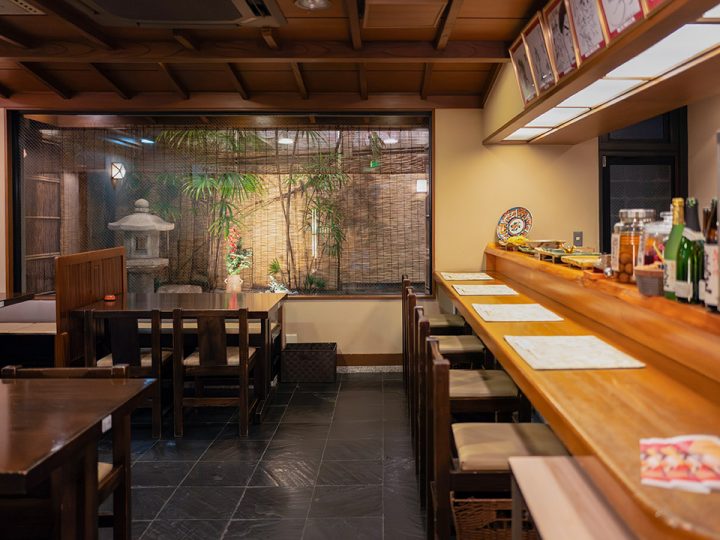
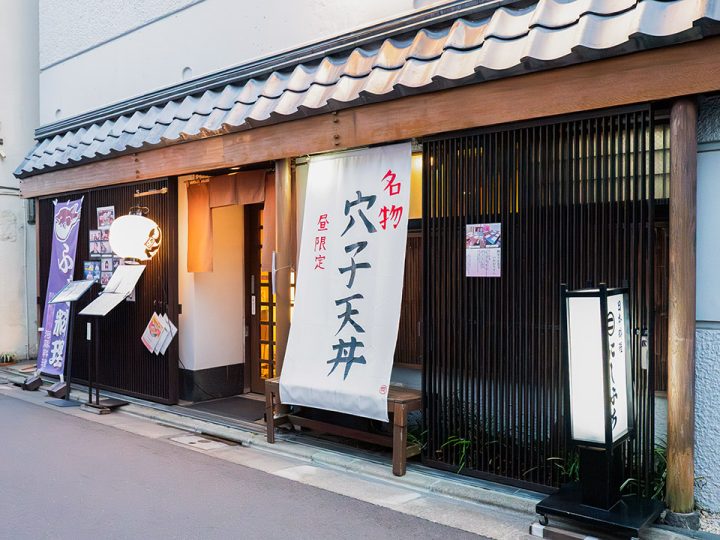
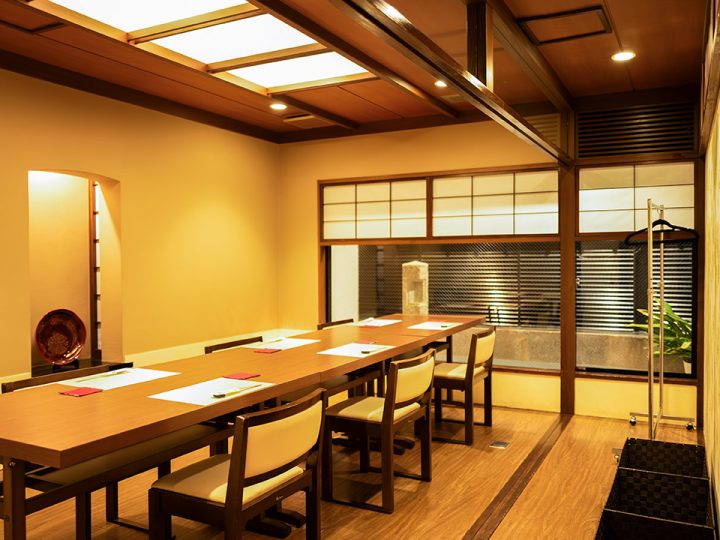
You may have heard about Japanese eating the highly poisonous blowfish, or “fugu”, and you may be aware that this fish, when eaten by a trained chef, is quite a delicacy in Japan. But where can you try such an exquisite cuisine? One place you can taste fugu in a welcoming and fitting Japanese atmosphere is Nishibuchi, a Japanese restaurant specializing in the blowfish cuisine, tucked away in the residential neighborhood of Asagaya, Tokyo.
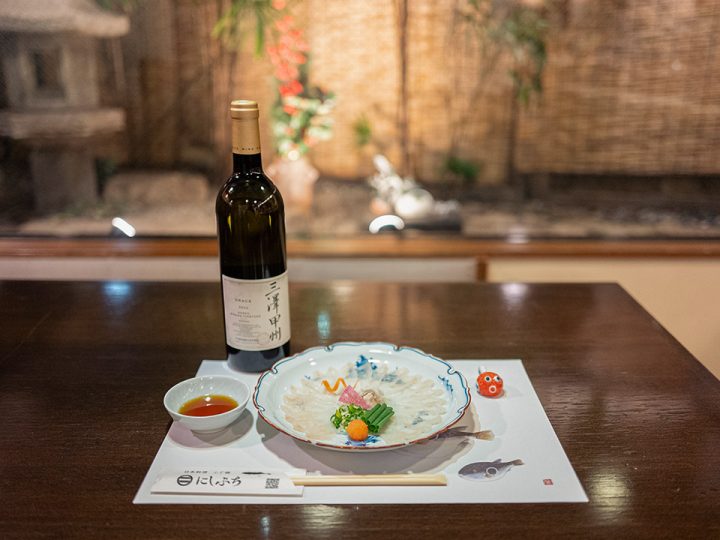
The restaurant has been trusted and loved by local patrons and those seeking the best of Japanese cuisine for over 35 years, since Nishibuchi opened in 1989, Heisei year 1. The current master chef is Mr. Konno, who is also the 2nd generation owner. Konno-san, in addition to the special license needed to prepare blowfish, holds many awards for both his skills in safe fugu preparation and his fugu meals. These meals include fugu sashimi and fugu nabe, Japanese hotpot with blowfish. This way you are guaranteed that not only is the blowfish at Nishibuchi safe, but it is also top-quality and delicious.
In fact, Chef Konno-san, is very particular about the blowfish he uses, as any highly invested chef or artisan would be about their craft. Nishibuchi exclusively uses the torafugu (tiger puffer) type of blowfish, and these are all exclusively caught in the wild, not raised. He tells us these factors are key to quality-tasting blowfish. He also makes his own ponzu sauce–a Japanese sauce that blends soy sauce with citrus flavoring and other ingredients–a process that takes two months to get the taste just right. He told us that “ponzu is the lifeblood of blowfish,” speaking to how perfectly the flavors blend together. He also begins preparations seasoning blowfish 5 days in advance to get those flavors just right, which is a benefit of making reservations 5 days in advance if you want to eat the best fugu, or perhaps Japanese cuisine, of your life!
Dining Options at Nishibuchi
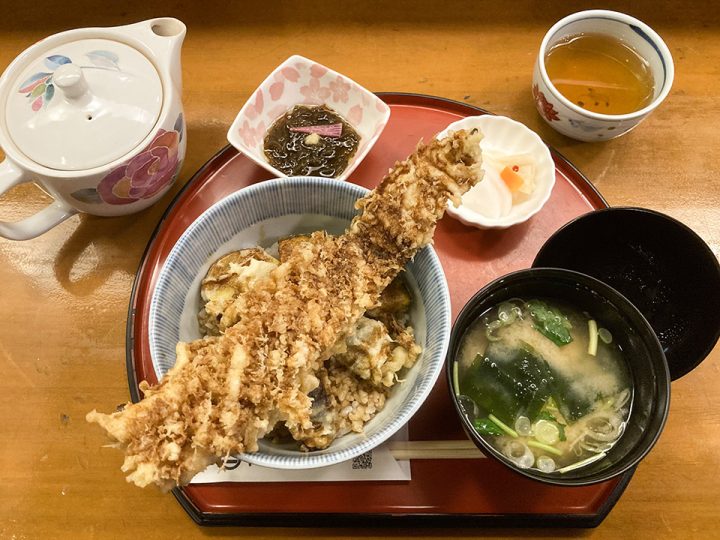
Though reservations are helpful, walk-in customers are also welcome, especially for lunch. Nishibuchi’s lunch is a good choice for customers wanting to get a more casual and affordable experience. All of the blowfish cuisine available at dinner can also be ordered at lunch time, with additional popular lunch-only favorites such as ebi tendon (shrimp tempura on rice, 1540 yen) and anago tendon (eel tempura on rice, 1870 yen). These are all served with homemade pickles, miso soup, another small seasonal seaweed or vegetable dish, and tea.
If you’d like to make dinner reservations, try using the site Guru Navi, here (external link).
For dinner, you will most likely be enjoying a fancy course meal, as fugu does come at a certain price (ranging from 10,000 yen to 30,000 yen)–not only are these meals considered Japanese delicacies, but they are also prepared by highly trained chefs. Konno-san prepares all blowfish dishes by himself from scratch, which is rare among restaurants that serve this delicacy. Master chef Konno has honed his skills to a point where he can slice the blowfish skin rapidly into sheets as thin as paper. We watched a video of him doing cutting the pufferfish skin and it was amazing to see. It looked as if it was being played at double speed, but it was, in fact, real time.
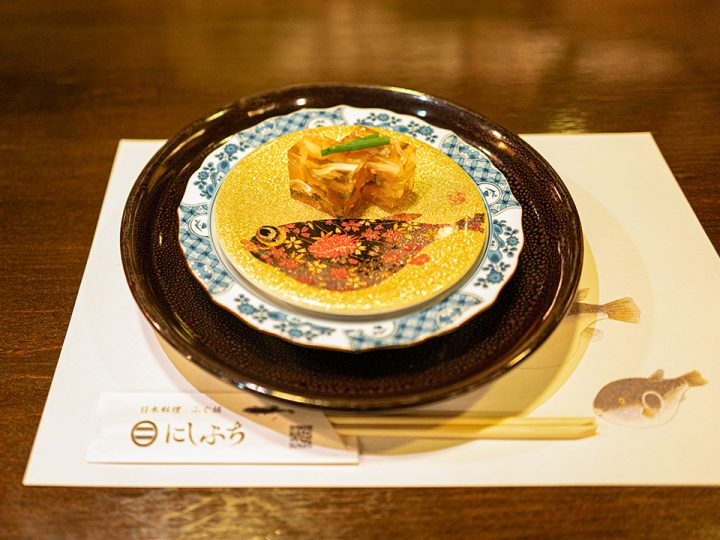
Since the internal organs of the blowfish are dangerous, only the meat is used in things like sashimi. The skin, as well as spines, is also used for very unique cuisine which you will likely have never had anything close to. Nikogori is a kind of jelly cut into cubes, made from the blowfish skin, rich in collagen. Kawa-ponzu uses different areas of the torafugu skin, each with their own taste, color and texture, combined with the aforementioned ponzu sauce, as well green onions and momiji-oroshi. This homemade momiji-oroshi, a red paste resembling the color of momiji (red maple leaves) from grated daikon radish and chili pepper, adds a delightful hint of spice to the citrus flavors and pungent green onions. These are just some of the delicacies included with the fugu course.
Fugu Meals or Kaiseki Meals, Wine or Japanese Sake
For those who want to enjoy the best that Japanese cuisine has to offer but are hesitant about trying blowfish, Nishibuchi also offers a traditional Japanese kaiseki course meal which does not use any blowfish. And if that weren’t enough, Chef Konno is also a bit of a wine connoisseur, offering his personal favorite and recommended Grace Wine from Yamanashi Prefecture. As it is not typically available for purchase, he acquires it directly from the winery. Both wine and Japanese sake pair well with fugu cuisine. Other spirits and soft drinks are also available.
If you have the time and budget during your Tokyo visit, do not miss this gem of Japanese cuisine, Nishibuchi Fugu & Japanese Restaurant, in Asagaya!
ACCESS
Writer: Greg
Photographer: Kasamine
YOU ALSO MIGHT LIKE:
IN THE AREA: